






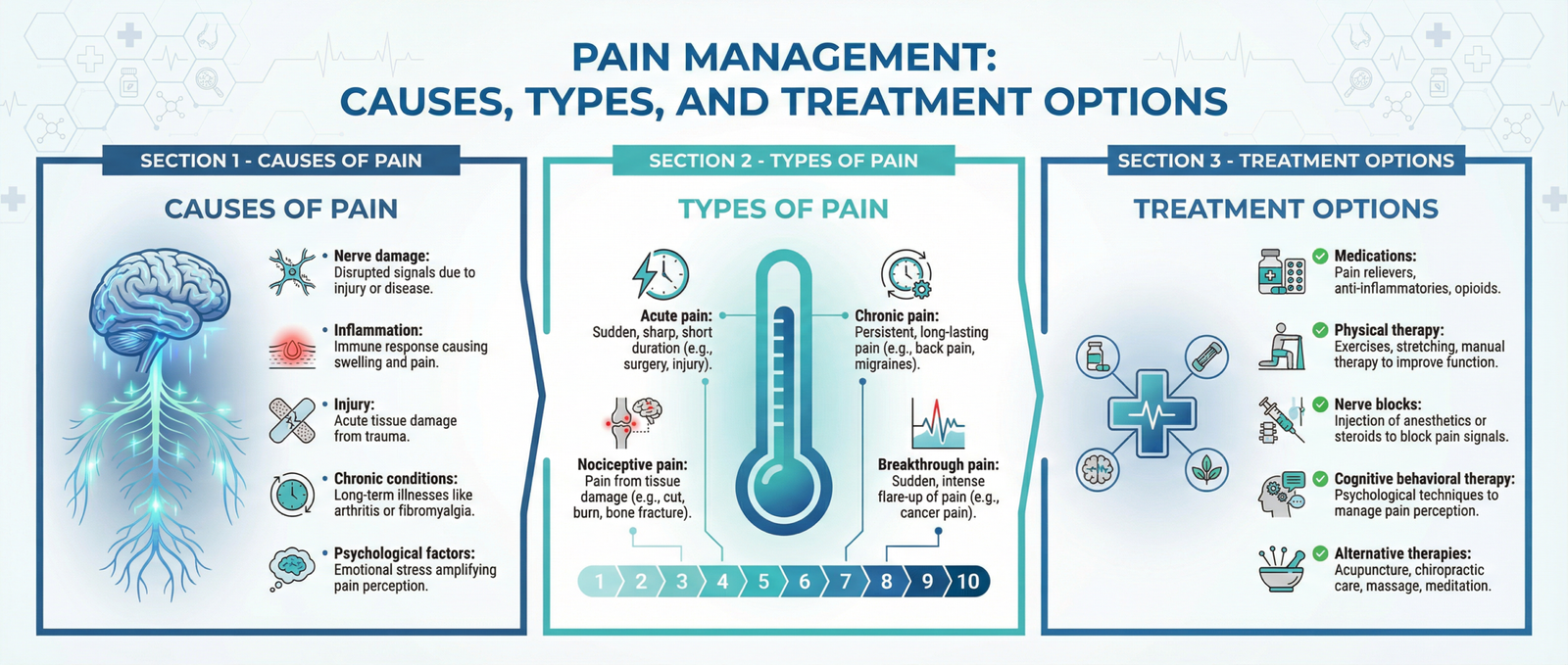
Pain Management: Causes, Types, and Treatment Options
Pain is one of the most common health issues affecting people of all ages. It can range from mild discomfort to severe, long-lasting conditions that interfere with daily life. Effective pain management focuses on identifying the cause of pain and choosing the right treatment approach to improve comfort and functionality.
This guide explains different types of pain, common causes, symptoms, and available treatment options to help manage pain safely and effectively.
What Is Pain?
Pain is the body’s natural warning system. It signals that something is wrong, such as injury, inflammation, or illness. While short-term pain is often protective, long-term or chronic pain can become a serious health concern.
Pain may be:
Temporary or long-lasting
Mild or severe
Localized or widespread
Understanding the nature of pain is the first step toward proper treatment.Many people seek professional support through structured pain management treatments when discomfort begins to affect daily life.
Types of Pain
1. Acute Pain
Acute pain appears suddenly and usually lasts for a short period. It is often caused by:
Injuries
Surgery
Muscle strain
Dental procedures
Once the underlying cause heals, acute pain typically improves.Neuropathic pain is commonly managed using targeted nerve pain medications.
2. Chronic Pain
Chronic pain lasts longer than three months and may continue even after the original injury has healed. Common causes include:
Arthritis
Back pain
Migraines
Long-term medical conditions
Chronic pain often requires ongoing management rather than short-term treatment.Chronic pain often requires ongoing care through specialized chronic pain treatment options.
3. Neuropathic (Nerve) Pain
This type of pain occurs when nerves are damaged or irritated. It is often described as:
Burning
Tingling
Shooting or stabbing pain
Neuropathic pain is commonly associated with conditions like nerve injuries or certain chronic illnesses.
Common Causes of Pain
Pain can result from many factors, including:
Physical injuries
Inflammation
Muscle or joint disorders
Nerve damage
Post-surgical recovery
Identifying the root cause helps determine the most effective pain management strategy.Inflammation-related discomfort is often treated using clinically approved anti-inflammatory pain relief products.
Symptoms Associated With Pain
Pain may be accompanied by:
Reduced mobility
Muscle stiffness
Swelling or tenderness
Fatigue
Difficulty sleeping
When pain interferes with daily activities or sleep, medical attention may be necessary.
Pain Management Approaches
Managing pain often requires a combination of methods rather than a single solution.
1. Lifestyle and Physical Measures
Simple measures can help reduce pain intensity:
Rest and proper posture
Gentle stretching and exercise
Heat or cold therapy
Physical therapy
2. Medications for Pain Relief
In some cases, doctors may recommend medications to manage moderate to severe pain. These treatments are prescribed based on the type and intensity of pain and are typically used under medical supervision. For moderate to severe pain, doctors may prescribe medications such as Macpred-4 4Mg Methylpred
3. Long-Term Pain Management
For chronic conditions, pain management may focus on:
Improving quality of life
Reducing flare-ups
Maintaining daily function
A structured pain management plan can help individuals stay active and productive.Long-term pain conditions may benefit from comprehensive chronic pain management programs.
When to See a Doctor
You should consider professional medical advice if:
Pain lasts longer than expected
Pain worsens over time
Daily activities become difficult
Pain affects sleep or mental well-being
Early treatment can prevent pain from becoming chronic.Persistent pain should be evaluated using reliable pain relief solutions to avoid long-term complications.
Frequently Asked Questions (FAQs)
Can pain be managed long-term?
Yes. With proper treatment plans and consistent care, many people successfully manage long-term pain.
Is medication always necessary?
Not always. Some pain improves with lifestyle changes, physical therapy, or non-medication approaches.
Should chronic pain be ignored?
No. Persistent pain should always be evaluated by a healthcare professional.
Final Thoughts
Pain can significantly impact daily life, but effective pain management is possible with the right approach. Understanding the type and cause of pain allows for better treatment decisions and improved overall well-being.