






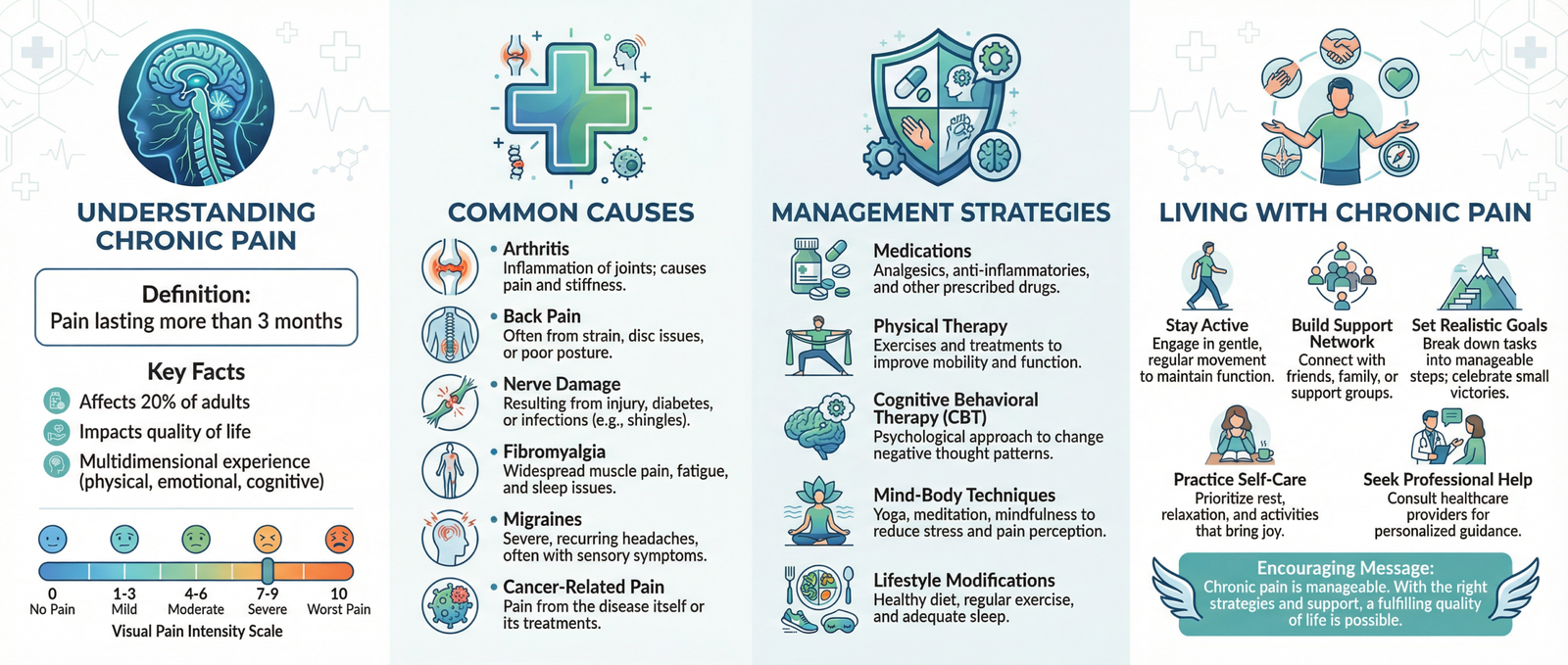
Chronic Pain Management Guide
Chronic pain is a long-lasting condition that continues for weeks, months, or even years. Unlike short-term pain, chronic pain often does not go away on its own and may require ongoing care to manage symptoms and improve daily life.
This guide explains what chronic pain is, common causes, symptoms, and effective strategies for long-term pain management.
What Is Chronic Pain?
Chronic pain is defined as pain that lasts longer than three months. It may remain even after an injury has healed or appear without a clear cause. This type of pain can affect the body physically and emotionally, making everyday activities more challenging.
Common areas affected include the back, joints, muscles, and nerves.
Common Causes of Chronic Pain
hronic pain may develop due to:
Arthritis and joint conditions
Back or neck injuries
Nerve damage
Post-surgical complications
Long-term inflammation
Identifying the underlying cause is important for choosing the right treatment approach.
Symptoms Associated With Chronic Pain
People with chronic pain may experience:
Persistent discomfort or aching
Stiffness and reduced mobility
Fatigue and low energy
Difficulty sleeping
Emotional stress or frustration
When these symptoms affect daily functioning, professional guidance is recommended.
Chronic Pain Management Strategies
Managing chronic pain often requires a combination of approaches rather than a single solution.
Lifestyle and Physical Care
Simple changes can help reduce pain intensity:
Gentle exercise and stretching
Maintaining good posture
Heat or cold therapy
Physical therapy support
Medical Treatment Options
Doctors may recommend medications to help control moderate to severe chronic pain. These treatments are typically prescribed based on the type of pain and are used under medical supervision.Doctors may recommend medications to help control moderate to severe chronic pain. Depending on the condition, treatments such as Macpred-4 4Mg Methylpred, Noosanta 100Mg Tapetnadol, or Pain O Soma 350Mg Carisoprodol may be prescribed under medical supervision to improve daily comfort and mobility.
Long-Term Pain Control and Quality of Life
The goal of chronic pain management is not always to eliminate pain completely but to reduce discomfort and improve daily functioning. Consistent treatment, healthy habits, and proper medical support can help individuals stay active and maintain a better quality of life.