






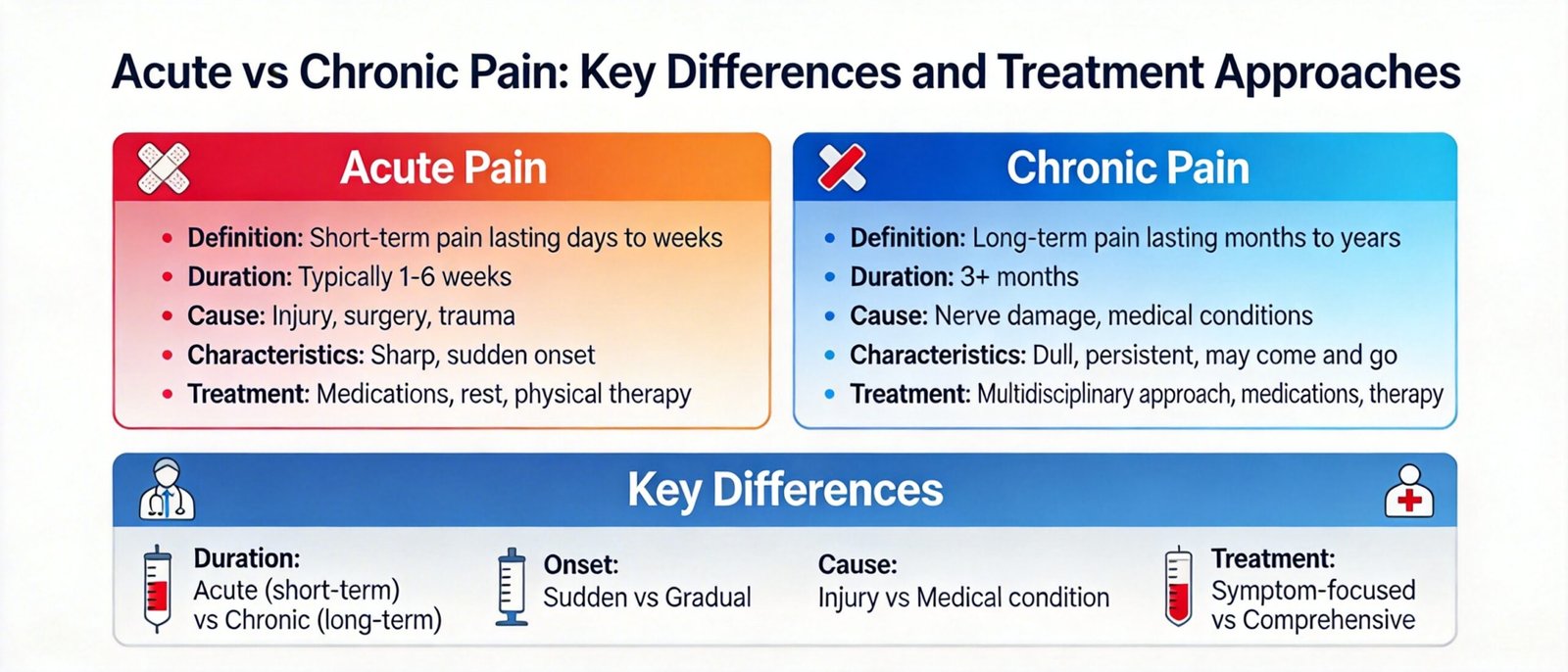
Acute vs Chronic Pain: Key Differences and Treatment Approaches
Pain can affect people in different ways depending on its cause, intensity, and duration. One of the most important distinctions in pain care is understanding the difference between acute pain and chronic pain. Knowing how these two types of pain differ helps in choosing the right treatment approach.
This guide explains acute and chronic pain, their causes, and how they are commonly managed.
What Is Acute Pain?
Acute pain is short-term pain that appears suddenly and usually lasts for a limited period. It is often caused by a specific injury or event and typically improves as the body heals.
Common causes of acute pain include:
Muscle strain or injury
Surgical procedures
Dental pain
Minor accidents
Acute pain serves as a warning signal and usually resolves once the underlying issue is treated.
What Is Chronic Pain?
Chronic pain lasts longer than three months and may continue even after the original injury or illness has healed. It can affect physical movement, sleep, mood, and overall quality of life.
Conditions commonly associated with chronic pain include:
Arthritis
Back or joint disorders
Nerve-related pain
Long-term inflammatory conditions
For a detailed explanation of long-term pain care, refer to our Chronic Pain Management Guide.
Treatment Approaches for Different Pain Types
Acute pain is usually managed with:
Rest and recovery
Physical care such as ice or heat therapy
Short-term medical treatment when required
Managing Chronic Pain
Chronic pain often requires a long-term plan that focuses on:
Reducing discomfort
Improving mobility
Supporting daily function
Preventing flare-ups
A broader overview of pain types and treatment options is covered in our main Pain Management pillar guide.
When to Seek Medical Help
You should consult a healthcare professional if:
Pain lasts longer than expected
Pain worsens instead of improving
Daily activities or sleep are affected
Early evaluation can help prevent pain from becoming a long-term condition.
Final Thoughts
Both acute and chronic pain require proper attention, but their treatment approaches differ significantly. Recognizing the type of pain you are experiencing is the first step toward effective management and better quality of life.
For a complete understanding of pain causes and treatments, explore our detailed Pain Management guide.